Blog (Design Insights)
Ideas, tips, and inspiration for modern living
How to Design a Custom Home in Canberra: What You Need to Know Before You Start
The short answer: a custom home design process starts with your site — its orientation, slope and planning controls — not with a floor plan. Get those conditions right first and every design decision that follows becomes clearer, faster and less expensive to resolve.
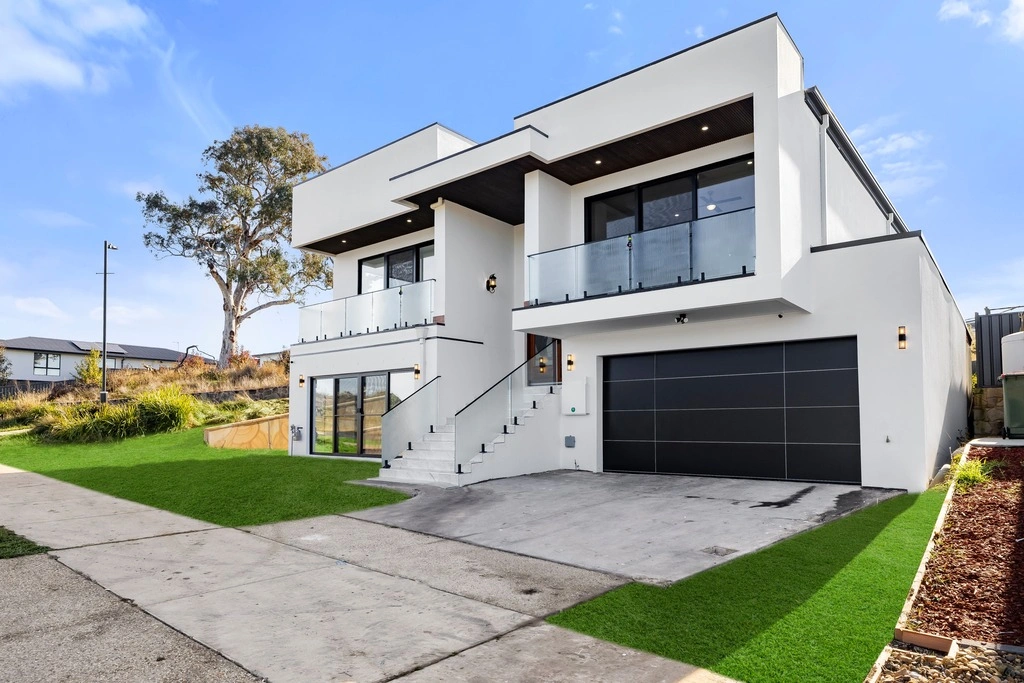
Discover the Taste of Architecture: Shiraz Atelier's Design Philosophy in Canberra
At Shiraz Atelier, we believe architecture transcends mere aesthetics—it evokes emotion and sensation. Our philosophy, "Discover the Taste of Architecture," invites you to experience spaces that resonate deeply, much like savoring a finely crafted dish. As a Canberra-based studio specializing in bespoke residential design, we create custom homes attuned to the ACT's climate and lifestyle, blending form, function, and feeling.
The Essence of Architectural Taste
Great architecture has a distinct "taste"—a signature blend of identity, memory, and experience. In Canberra's residential designs, this emerges through:
Seamless flow: Intuitive layouts that facilitate effortless movement.
Harmonious light: Soft diffusion of natural sunlight to enhance daily comfort.
Thoughtful textures: Materials like timber and stone that interact meaningfully.
Intentional spaces: Balanced proportions ensuring privacy and openness.
Purposeful details: Elements that align with your lifestyle and values.
These qualities transform a house into a home you not only inhabit but truly feel—one that uplifts, adapts to seasonal shifts, and endures.
Our Approach: Emotion in Every Detail
We begin each project by envisioning the emotions your home will inspire: the serenity of open living areas, the warmth of tactile surfaces, or the delight of sunlit kitchens. Prioritizing character over convention, we tailor flavors—warm and grounded, minimalist and airy, or bold and textured—to reflect your vision. Compliant with ACT regulations and sustainable practices, our designs ensure timeless appeal.
Why It Matters: A Home Uniquely Yours
A Shiraz Atelier home delivers:
Daily comfort and natural flow.
Mood-enhancing atmospheres.
Climate-responsive features.
Enduring, personalized beauty.
This philosophy is our commitment: not just plans, but spaces that feel profoundly yours.
Ready to explore the taste of your ideal Canberra residence? 👉 Start Your Project Contact us to discuss your ideas—we look forward to crafting something exceptional.
Understanding Canberra's Climate: Why Passive Solar Design Matters for Your Home
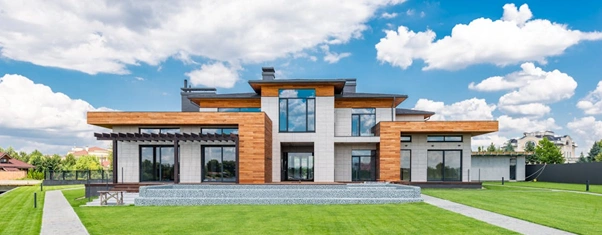
by Shiraz Atelier | Building Designers & Residential Design Studio Canberra
Understanding Canberra's Climate: Why Passive Solar Design Matters for Your Home
by Shiraz Atelier | Building Designers & Residential Design Studio Canberra
Key Takeaways
Canberra's extreme climate (winter lows to -8°C, summer highs to 41°C) makes passive solar design essential, not optional
Well-designed passive solar homes use 40-60% less energy for heating and cooling, saving $600-$1,200+ annually
Five core principles work together: orientation, thermal mass, glazing, shading, and insulation
North-facing orientation with proper eave sizing blocks summer sun while capturing winter warmth
Even challenging sites (east-west blocks, south-facing slopes) can achieve excellent passive solar performance
If you've lived through even one Canberra winter, you know the story: frosty mornings with ice on the windscreen, breath hanging in the air inside before the heating kicks in, and energy bills that make you wince. Then summer arrives with its own challenge—relentless dry heat that can turn your home into an oven by mid-afternoon.
This is Canberra's climatic paradox, and it's exactly why passive solar design isn't just an architectural preference in the ACT—it's a fundamental necessity.
As building designers who have spent decades working in this region, we've witnessed how thoughtful, solar-responsive architecture transforms homes from energy-hungry shells into comfortable, sustainable sanctuaries. Let's explore why Canberra's unique climate demands this approach, and how passive solar principles can dramatically reduce your energy costs while enhancing everyday comfort.

Key Takeaways
Canberra's extreme climate (winter lows to -8°C, summer highs to 41°C) makes passive solar design essential, not optional
Well-designed passive solar homes use 40-60% less energy for heating and cooling, saving $600-$1,200+ annually
Five core principles work together: orientation, thermal mass, glazing, shading, and insulation
North-facing orientation with proper eave sizing blocks summer sun while capturing winter warmth
Even challenging sites (east-west blocks, south-facing slopes) can achieve excellent passive solar performance
If you've lived through even one Canberra winter, you know the story: frosty mornings with ice on the windscreen, breath hanging in the air inside before the heating kicks in, and energy bills that make you wince. Then summer arrives with its own challenge—relentless dry heat that can turn your home into an oven by mid-afternoon.
This is Canberra's climatic paradox, and it's exactly why passive solar design isn't just an architectural preference in the ACT—it's a fundamental necessity.
As building designers who have spent decades working in this region, we've witnessed how thoughtful, solar-responsive architecture transforms homes from energy-hungry shells into comfortable, sustainable sanctuaries. Let's explore why Canberra's unique climate demands this approach, and how passive solar principles can dramatically reduce your energy costs while enhancing everyday comfort.
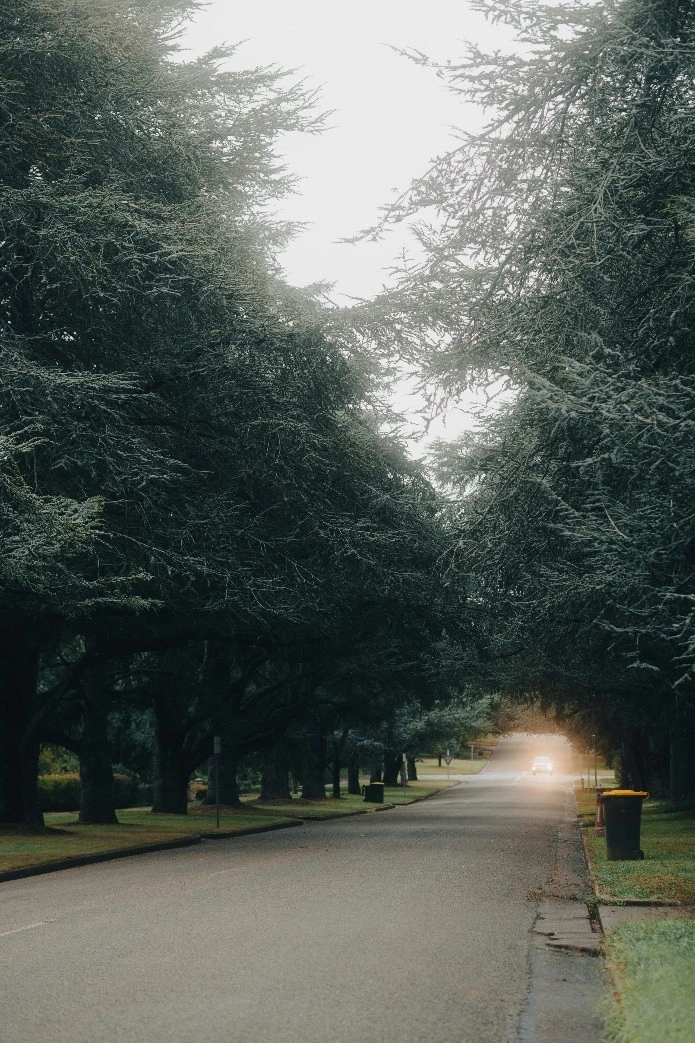
Canberra's Climatic Challenge: Designing High-Performance Homes
Canberra sits at approximately 570 metres elevation in southeastern Australia, creating what meteorologists classify as a semi-continental climate. For your home, this means dealing with dramatic temperature swings that create unique design challenges:
Winter reality:
Typical overnight lows near 0°C, with frequent frosts
Recorded temperatures down to -8°C
Heavy heating demands from May through September
Morning condensation and ice formation
Summer conditions:
Many days reaching 35°C with low humidity
Recorded highs of 41.1°C
Intense solar radiation with minimal cloud cover
Hot, dry afternoons requiring significant cooling
These extremes mean your home must simultaneously:
Capture and retain precious warmth during severe winters
Reject heat and encourage natural cooling during scorching summers
Often achieve both functions using the same architectural elements
When design is poor, homeowners end up fighting the climate year-round, running heaters and air conditioners constantly in an expensive, never-ending battle against nature.
The financial impact is substantial. Typical annual electricity bills for a two-person household in Canberra range from $1,500 to $2,100, with Canberra recording the second-highest annual energy use in Australia after Tasmania. This is largely due to the extensive heating required not just through winter, but across spring and autumn as well. For most households, heating and cooling represent the largest portion of energy consumption—costs that passive solar design can reduce by 40-60%.
What Is Passive Solar Design? Architecture That Works With Nature
Passive solar design is the art and science of positioning and shaping a building to harness natural energy flows. Building features such as orientation, thermal mass, insulation and glazing work together to take advantage of natural heating and cooling sources—primarily the sun and breezes—while minimizing unwanted heat gain and loss.
Unlike active solar systems that rely on panels, pumps, or mechanical equipment, passive design uses the building itself as a solar collector, heat store, and distribution system.
Think of it as architectural judo: using the sun's predictable movement and seasonal intensity to your advantage rather than fighting against it. In winter, you invite low-angle sunshine deep into your home where it warms thermal mass that radiates heat back throughout the cold night. In summer, that same design rejects direct sunlight while encouraging cooling cross-ventilation.
The beauty of passive solar design is that it works silently, continuously, and cost-free:
No operating costs once built
Zero emissions during operation
Minimal maintenance requirements
Permanent performance integrated into the building fabric
These systems simply become part of your home's architecture, quietly delivering comfort and affordability for decades.
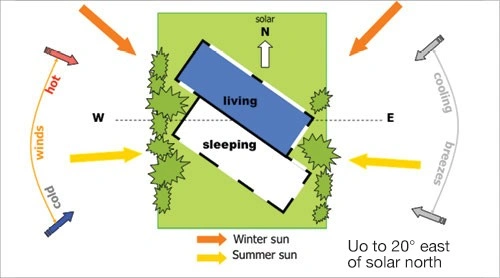
The 5 Core Principles of Canberra Passive Solar Design
1. Orientation: Capturing the Northern Sun
In the Southern Hemisphere, the sun tracks across the northern sky throughout the day, making north-facing orientation the cornerstone of effective passive solar design.
Why north matters for Canberra homes:
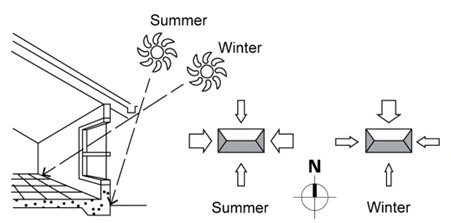
The optimal orientation for passive heating positions living areas within 15° west and 20° east of true (solar) north. This precise positioning allows standard eave overhangs to perform their dual function: admitting low-angle winter sun while blocking high-angle summer rays—all without any mechanical systems or adjustable components.
The science behind it: At Canberra's latitude (35.3°S), the sun's angle varies dramatically between seasons:
Winter solstice: Sun reaches only 29-33° above the northern horizon at midday
Summer solstice: Sun climbs to 65-67° above the horizon
Difference: This 35+ degree variation is what makes fixed horizontal shading so effective
When your main living spaces face north, you maximize solar gain during the months when heating is essential, while the same windows receive minimal direct sun during the cooling season.
What if your block doesn't face north perfectly?
Don't worry—skilled designers can achieve excellent passive solar performance even on challenging sites. We regularly design highly efficient homes on:
East-west oriented blocks
Narrow urban infill lots
South-facing slopes
Irregularly shaped parcels are common in areas like the Molonglo Valley
The strategies include:
Strategic window placement and sizing
Clerestory or highlight windows to capture northern light
Internal courtyards to create north-facing zones
Reflective surfaces to redirect sunlight
Smart internal room planning that prioritizes living spaces
We've successfully delivered 7-star and 8-star rated homes on blocks with less-than-ideal orientation by understanding Canberra's specific solar geometry and applying creative architectural solutions.
2. Thermal Mass: Your Home's Heat Battery
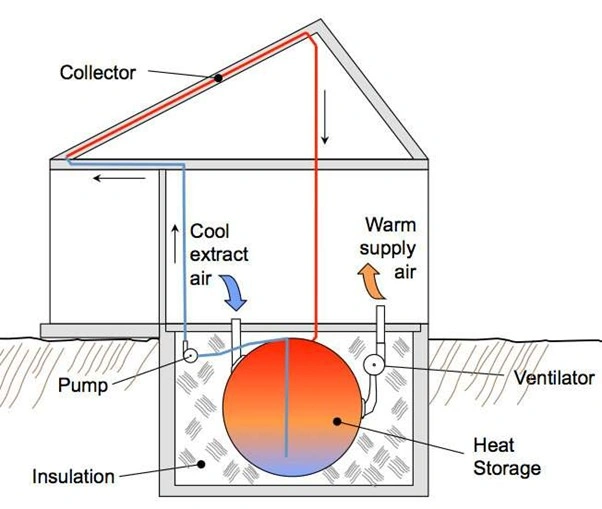
Thermal mass is perhaps the most powerful—yet most misunderstood—element of passive solar design. It refers to the ability of dense materials to absorb, store, and slowly release thermal energy.
How thermal mass works in practice:
Materials like concrete, brick, stone, and rammed earth have high thermal mass. When positioned where winter sun can strike them directly:
During sunny winter days: The mass absorbs solar radiation, storing it as heat energy within the material
As evening temperatures drop: The stored heat radiates slowly back into your living spaces
Throughout the night: The mass continues releasing warmth, maintaining comfort without heating systems
Think of it as a natural, built-in heater that charges during the day and operates all night—completely free and silent.
Getting the balance right:
The relationship between glazing and thermal mass is critical. As a design guideline:
North-facing glass with good solar access should represent approximately 15-25% of the area of exposed thermal mass in a room
For cold climates like Canberra, we typically aim toward the higher end (20-25%)
The thermal mass must be directly exposed to winter sun and to the room air
Common mistakes to avoid:
❌ Too much glass, insufficient mass: Results in daytime overheating and rapid cooling after sunset
❌ Too much mass, inadequate sun exposure: Wastes the material's thermal storage potential
❌ Covering thermal mass: Carpet, rugs, or floating floors insulate the mass from both sun and air
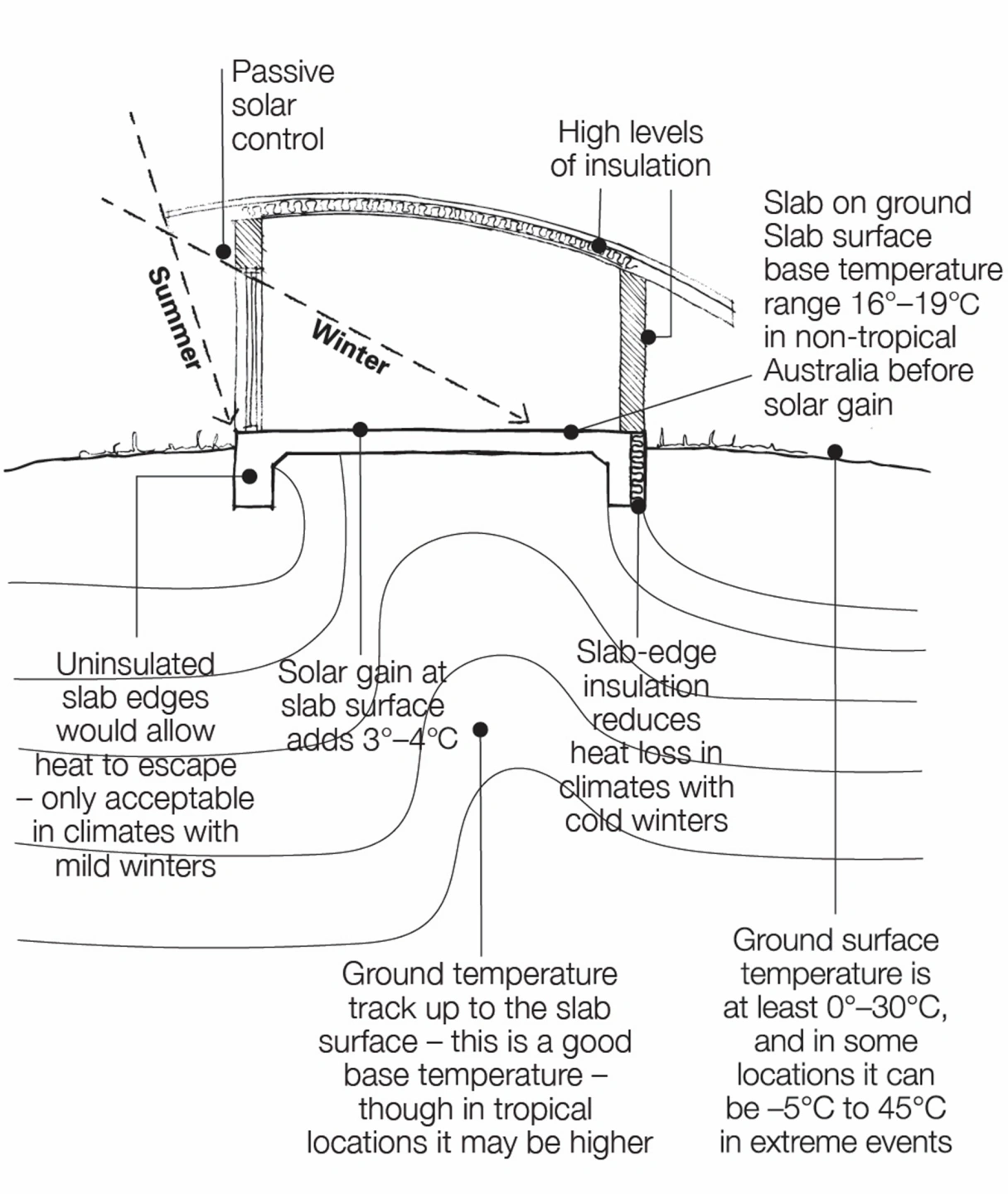
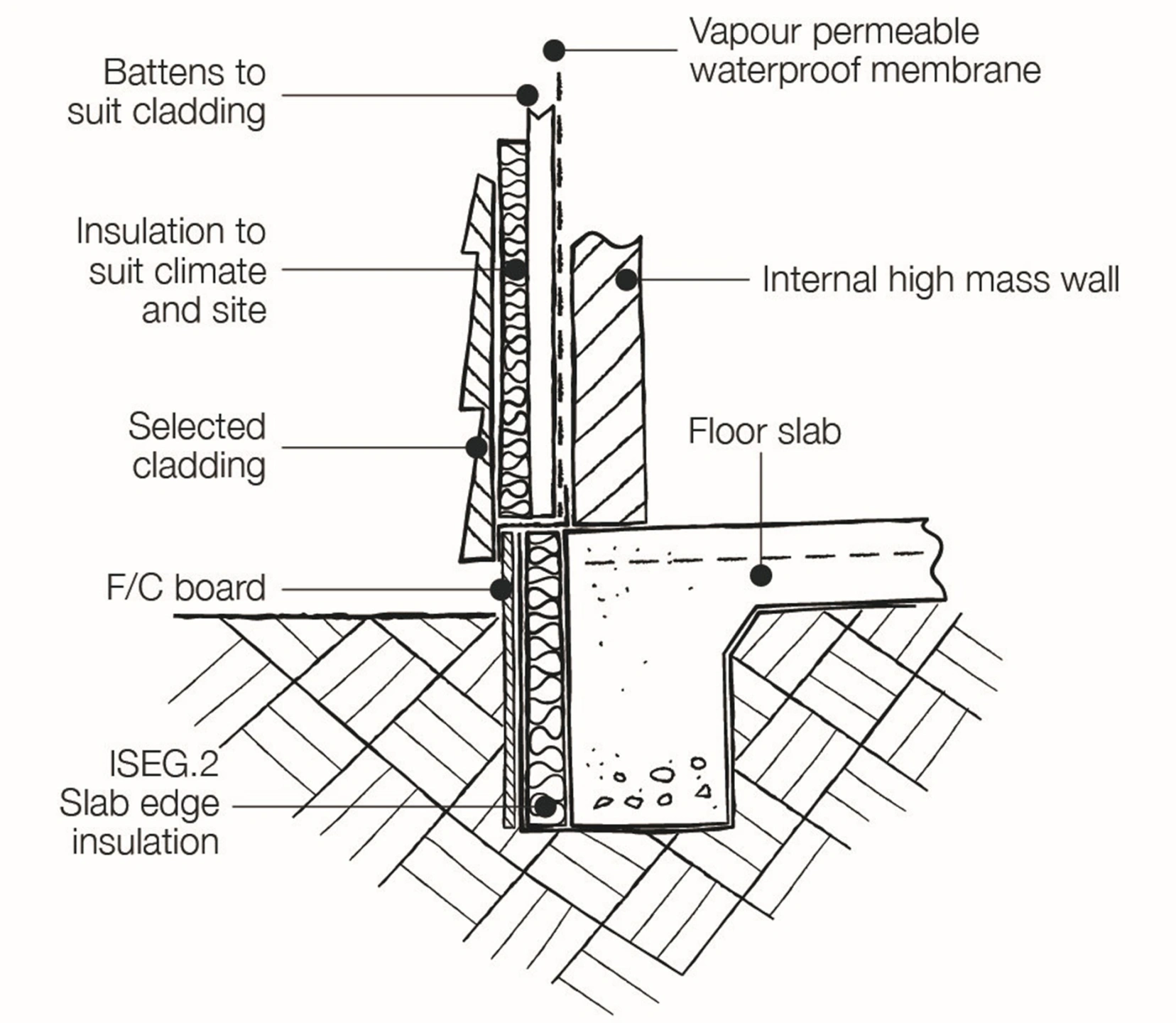
❌ Uninsulated slabs: Allow heat to drain into the ground rather than storing it
Thermal mass applications we specify for Canberra:
Polished concrete slabs in north-facing living areas and dining spaces
Internal brick or masonry feature walls positioned to receive winter sunlight
Dark or mid-toned surface finishes to maximize solar absorption (light colors reflect rather than absorb)
Thermal breaks under slabs to prevent ground heat loss
Water features or masonry room dividers as additional thermal storage
The mass must be thermally isolated from the ground beneath and exposed on both sides—to the sun for charging and to the room air for heat distribution.
The 5 Core Principles of Canberra Passive Solar Design
3. Glazing: Windows That Work Both Ways
Windows are simultaneously the thermal weak point and the solar gain opportunity in any building envelope. The challenge lies in balancing solar collection, natural light, views, and thermal performance.
The glazing dilemma:
Up to 40% of a home's heating energy can be lost through windows
Up to 87% of unwanted summer heat gain enters through glazing
Yet windows provide essential daylight, outlook, and winter solar gain
This is why we tailor glazing specifications differently for each orientation:
North-Facing Windows: Your Solar Collectors
Strategy: Larger openings with solar-optimised glass
Typically 10-25% of the floor area in living zones
Higher Solar Heat Gain Coefficient (SHGC) ratings (0.5-0.7) to maximise winter warmth
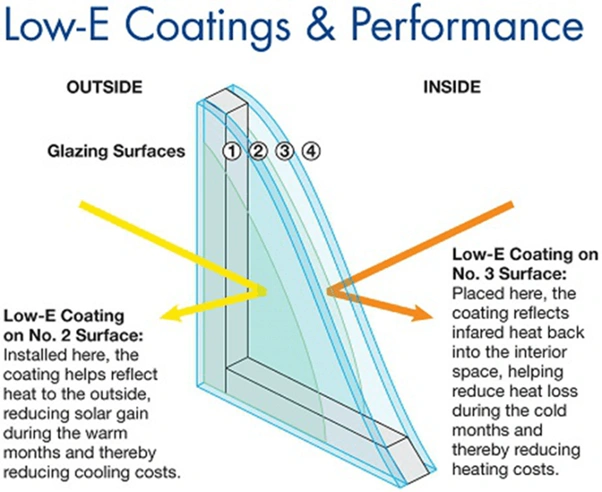
Double glazing with low-emissivity (low-E) coatings to retain captured heat
Argon gas fills for enhanced insulation (up to R0.5 improvement)
Clear or lightly tinted glass to maximise light transmission
Why it works: Low winter sun penetrates deeply, striking thermal mass. High summer sun is blocked by properly sized eaves before reaching the glass.
East and West Windows: The Problem Orientations
Challenge: Low-angle morning and afternoon sun penetrates deeply, causing glare and unwanted heat gain
Difficult to shade with horizontal elements
Creates hot spots and visual discomfort
Major contributor to summer overheating
Strategy: Minimise and protect
Reduce glazing area where possible (maximum 10-15% of floor area)
Specify high-performance glass with lower SHGC (0.3-0.4)
Install external vertical shading: screens, battens, louvres
Use deciduous trees or adjustable awnings
Consider high windows for light without low-angle glare
South-Facing Windows: The Cold Side
Reality: Minimal direct sun, coldest surface in winter
Primarily for ventilation, secondary lighting, or outlook requirements
Not contributors to passive solar gain
Strategy: Limit and insulate
Minimise opening sizes
Prioritise thermal performance over solar gain
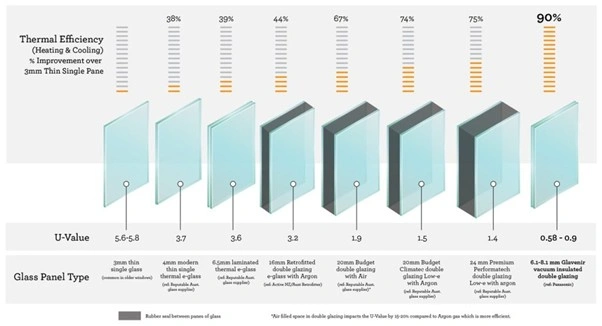
Specify double or triple glazing with low U-values
Focus on views and cross-ventilation rather than solar access
Modern glazing technology:
Today's high-performance windows have transformed what's possible in passive solar design. Double-glazed units with argon gas fills and low-E coatings can achieve R-values (thermal resistance) approaching R0.6-R0.8, nearly approaching traditional wall insulation while still transmitting 60-70% of visible light.
This means we can now design light-filled, visually open homes without the historic thermal penalties. The upfront cost premium (typically $150-$250 per square meter above standard glazing) pays for itself within 5-8 years through reduced heating and cooling costs.
4. Shading: The Summer Solution
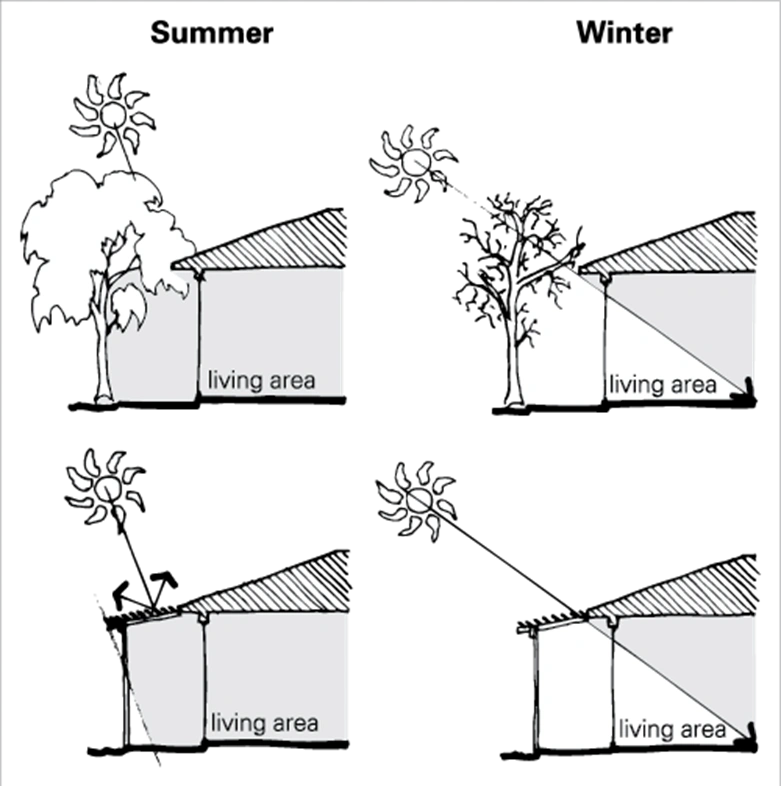
This is where passive solar design becomes truly elegant. Properly designed shading allows full winter sun penetration while blocking summer sun—using the same fixed architectural elements, with no moving parts or seasonal adjustments required.
How fixed shading achieves this magic:
At Canberra's latitude, the sun's altitude varies dramatically across seasons:
Winter (June 21): Altitude of 29-33° at solar noon
Summer (December 21): Altitude of 65-67° at solar noon
Equinox (March/September): Altitude of approximately 48°
This 35+ degree difference between winter and summer sun angles is the key to effective horizontal shading design.
Eave depth calculations for Canberra:
For a standard 2.4m high north-facing window, the optimal eave overhang depth is approximately 600-900mm, though we refine this calculation for each specific project based on:
Window head height above finished floor
Distance from wall to eave edge
Desired cut-off dates (when shading begins/ends)
Window reveal depth
Local microclimate factors
The geometry works like this:
A 750 mm eave projection above a 2.4m window will:
✅ Block 100% of direct sun from December to February (peak summer)
✅ Allow 80-90% winter sun penetration from June to August
🔄 Provide partial shading during shoulder seasons (Sept-Nov, Mar-May)
We use specialised solar modelling software (like ClimateStudio or Sefaira) to precisely predict sun penetration for your specific site, window configuration, and eave design throughout the year.
Shading strategies for other orientations:
East and West facades: Horizontal eaves are largely ineffective here because the sun is always low on the horizon. Instead, we use:
Vertical screening elements (battens, louvres, perforated panels)
Adjustable external blinds or awnings
Deciduous trees positioned 3-5m from the building
Minimised glazing area as first priority
Operable shading options:
While we prioritise fixed shading for reliability and zero maintenance, some projects benefit from adjustable elements:
External roller shutters (excellent security bonus)
Retractable awnings for flexibility
Adjustable louvre systems for variable control
The trade-off is increased cost, maintenance requirements, and the need for occupant engagement—which is why we design first for passive, fixed solutions.
The 5 Core Principles of Canberra Passive Solar Design
5. Insulation and Airtightness: Keeping the Good In and the Bad Out
All the solar gain you've carefully captured is wasted if your building envelope leaks heat like a sieve. Insulation and airtightness work together to maintain the thermal comfort you've created.
Insulation: The thermal barrier
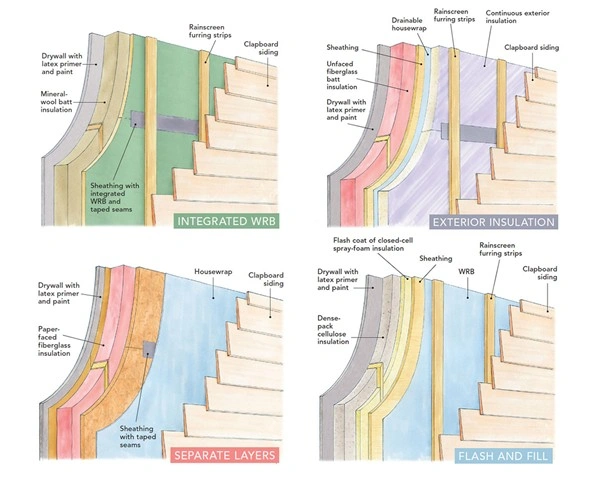
Insulation slows conductive heat flow through your roof, walls, and floors. In Canberra's climate (NCC Climate Zone 7), we typically specify:
Ceiling/Roof: R5.0 to R6.0 (or higher for Passive House standards)
External walls: R2.5 to R3.5 depending on construction method
Ground floor slabs: R2.0 to R3.0 edge and underfloor insulation
Suspended floors: R3.0 to R4.0 between floor joists
Why these levels matter: Insulation prevents the heat captured during sunny winter days from escaping overnight, and blocks external heat from entering during summer. The investment in upgrading from minimum code requirements (typically R2.5 walls, R4.0 ceiling) to high-performance levels pays for itself within 7-10 years through reduced energy bills.
Airtightness: The hidden heat thief
Air leakage through gaps, cracks, and poorly sealed building elements can account for up to 25% of total heating and cooling energy loss—even in an insulated home. Draughts create discomfort, cold spots, and force heating/cooling systems to work harder.
Common air leakage paths:
Gaps around the window and door frames
Penetrations for electrical, plumbing, and ventilation
Ceiling-to-wall junctions
Poorly sealed eaves and cornices
Exhaust fan housings
Recessed downlight fittings (if not sealed)
Our airtightness strategies:
✅ Design-stage detailing that minimises penetrations and complex junctions
✅ Quality window and door installation with flexible sealant or expanding foam
✅ Sealed electrical and plumbing penetrations using grommets or sealant
✅ Airtightness tapes at critical junctions during construction
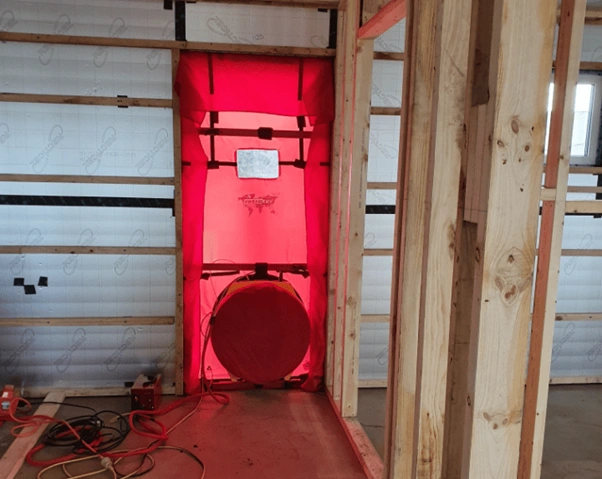
✅ Blower door testing during construction to identify and remedy leaks before lining
For standard homes, we target less than 10 air changes per hour at 50 Pascals pressure (ACH50). For high-performance and Passive House projects, we achieve 0.6-3 ACH50, creating genuinely airtight envelopes that dramatically reduce energy consumption.
Important note: Airtightness is not the same as poor ventilation. Properly designed homes include controlled ventilation through operable windows, mechanical extraction, or heat recovery ventilation systems, ensuring excellent indoor air quality while maintaining thermal performance.
The Performance Outcomes: Real Savings, Real Comfort
The financial and comfort benefits of passive solar design in Canberra are substantial and measurable.
Energy savings:
Well-designed passive solar homes typically use 40-60% less energy for heating and cooling compared to conventional construction
For an average Canberra household spending $1,800 annually on energy, this translates to $720-$1,080 in savings per year
Over a 25-year mortgage period, that's $18,000-$27,000 in reduced bills
Savings continue for the entire life of the home—50+ years of benefits
Comfort improvements:
Beyond the numbers, passive solar homes deliver a fundamentally different living experience:
✅ More stable temperatures throughout the day and across seasons—fewer extreme swings
✅ Warm floors on winter mornings instead of icy concrete requiring slippers
✅ Comfortable summer evenings without air conditioning running constantly
✅ Superior natural light quality—soft, even illumination rather than harsh glare
✅ Reduced reliance on mechanical heating and cooling systems
✅ Quieter indoor environment due to better sealing and insulation
✅ Improved air quality from controlled ventilation rather than random draughts
Environmental benefits:
Lower carbon footprint: 40-60% reduction in operational emissions
Reduced grid demand: Less strain on the electricity infrastructure during peak periods
Future-proof design: As energy costs rise, savings increase
Sustainable legacy: Reduced resource consumption for decades
Property value impact:
While harder to quantify, evidence suggests:
Homes with higher energy ratings (7+ stars) achieve price premiums in Canberra's market
Lower running costs are increasingly valued by buyers
Energy Performance Certificates make efficiency visible to purchasers
Quality passive solar homes age better and require less maintenance
Common Questions and Misconceptions About Passive Solar Design
"Won't large north-facing windows make my home too hot in summer?"
Answer: Not when they're properly shaded and paired with correctly sized thermal mass.
The key is the integration of three elements:
Fixed eave shading blocks high-angle summer sun before it reaches the glass
Thermal mass absorbs any heat that does enter, moderating temperature swings
Night ventilation releases stored heat when outdoor temperatures drop
A properly designed passive solar home in Canberra will have comfortable summer temperatures despite generous north-facing glazing. In fact, we often find that poorly designed east and west windows cause far more summer discomfort than appropriately shaded north windows.
"My block faces the wrong way—is passive solar design still possible?"
Answer: Absolutely. While true north orientation is ideal, experienced designers can achieve excellent passive solar performance on challenging sites.
We've successfully delivered highly efficient homes (7-8 star NatHERS ratings) on:
East-west blocks: Using clerestory windows, skylights, and split-level designs to capture northern sun
South-facing slopes: Employing two-storey designs with upper-level north orientation
Narrow urban lots: Creating internal courtyards or light wells for north access
Hemmed-in sites: Using high-level windows and reflective surfaces to redirect light
The solutions require more creative design thinking and sometimes modest cost increases, but the performance outcomes can match conventionally oriented homes. The key is working with designers who understand solar geometry and have experience solving these challenges.
"Is passive solar design only for new builds?"
Answer: No. Many passive solar principles can be retrofitted to existing homes with worthwhile results.
Renovation strategies include:
Adding north-facing windows or doors where possible (if you have northern access)
Installing external shading devices on problem east/west windows
Upgrading to high-performance glazing when replacing old windows
Adding insulation to ceilings, walls, and under floors during renovations
Introducing thermal mass such as concrete floors or masonry feature walls
Sealing air leaks around windows, doors, and penetrations
Installing ceiling fans to assist with air circulation and comfort
While it's always most cost-effective to integrate passive solar principles from initial design, renovations guided by these principles deliver noticeable improvements. We've helped many Canberra homeowners halve their energy bills through strategic passive solar upgrades during renovations.
"Will passive solar design increase my building costs?"
Answer: Some strategies cost nothing extra; others add initial cost but deliver a strong return on investment.
No-cost or low-cost strategies:
✅ Optimal site orientation (costs nothing—just thoughtful planning)
✅ Appropriate eave depths (standard construction, just sized correctly)
✅ Strategic room layout (costs nothing—improves functionality too)
✅ Thermal mass via concrete slab (often cheaper than timber floors)
Moderate cost additions with strong ROI:
Higher-performance windows: +$150-$250/m² (5-8 year payback)
Enhanced insulation: +$3,000-$6,000 for whole home (7-10 year payback)
External shading devices: +$2,000-$8,000 depending on scope (8-12 year payback)
Improved airtightness detailing: +$1,500-$3,000 (6-9 year payback)
Overall cost impact: For most projects, incorporating high-quality passive solar principles adds 2-5% to total construction cost. Given that heating and cooling equipment represents 3-5% of build cost anyway, you're essentially reallocating spending from active mechanical systems toward passive architectural solutions that deliver superior performance permanently.
After payback (typically 7-12 years), all subsequent savings are pure benefit for the remaining life of the home—30, 40, 50+ years of reduced energy costs.
"Do I need special maintenance for passive solar features?"
Answer: Passive solar design actually requires less maintenance than conventional homes.
There are no mechanical systems to service, no filters to replace, and no moving parts to break. Maintenance is limited to:
Standard window cleaning (same as any home)
Occasional inspection of weather seals around doors/windows
Keeping thermal mass surfaces exposed (don't cover with rugs long-term)
Trimming vegetation that might shade north windows in winter
Compare this to conventional homes where heating/cooling systems require annual servicing, periodic replacement (every 10-15 years), and ongoing repairs—and the low-maintenance advantage of passive design becomes clear.
Passive Solar Design Meets Modern Building Science at Shiraz Atelier
At Shiraz Atelier, we combine time-tested passive solar principles with contemporary building science and digital modeling tools to optimize every project.
Our design process integrates:
Advanced Energy Modeling
We use NatHERS (Nationwide House Energy Rating Scheme) software to:
Simulate your home's energy performance before construction begins
Model different design scenarios to find optimal solutions
Predict real-world heating and cooling loads
Verify compliance with building codes and your performance goals
Target 7-star, 8-star, or even Passive House standards
Site-Specific Analysis
We analyse:
Solar access patterns throughout the year using sun-path diagrams
Prevailing breezes and local microclimate conditions
Topography, slope, and drainage considerations
Neighboring buildings, vegetation, and shading impacts
Views, outlook, and connection to landscape
Specialist Expertise
Our team brings deep, specialized knowledge, including PhD-level knowledge in energy-efficient design and over 70+ years combined experience delivering high-performance homes in Canberra's specific climate.
Integration with Active Systems
Passive solar design forms the foundation, which we can seamlessly integrate with:
Solar photovoltaic (PV) systems to offset remaining energy needs
Battery storage for energy independence and resilience
Heat pump technology for efficient water heating and backup space heating
Heat recovery ventilation for controlled fresh air without heat loss
Smart home systems for optimized comfort and energy management
In a well-designed passive solar home, these active systems have far less work to do, making it cost-effective to achieve net-zero or even net-positive energy performance.
The Path Forward: Designing Your Passive Solar Home
Creating an effective passive solar home for Canberra's climate requires three critical elements:
Deep understanding of local climate and building physics
Technical expertise in the complex interactions between orientation, thermal mass, glazing, shading, and insulation
Attention to detail throughout design, documentation, and construction
Getting one element wrong can compromise the performance of all the others. A home with perfect north orientation but inadequate thermal mass will overheat during the day and cool rapidly at night. Generous thermal mass without proper insulation will lose all its stored heat to the ground. High-performance windows without airtight installation will leak expensive conditioned air.
This is where working with experienced building designers who deeply understand Canberra's specific conditions becomes invaluable.
We begin every project by:
Analysing your site's solar access, prevailing breezes, slope, views, and constraints
Understanding your lifestyle patterns, family needs, and daily routines
Establishing your budget parameters and performance expectations
Exploring your aesthetic preferences and architectural aspirations
Then we develop a design that:
Weaves passive solar principles seamlessly into the architectural concept
Balances performance, beauty, functionality, and budget
Creates spaces filled with natural light and thermal comfort
Connects meaningfully to Canberra's climate and landscape
Delivers measurable energy savings and reduced environmental impact
The result is a home that feels fundamentally different:
Naturally comfortable across all seasons with minimal mechanical intervention
Flooded with beautiful, soft natural light throughout the day
Connected to the sun's daily and seasonal rhythms
Economical to run, reducing financial stress and environmental impact
A pleasure to inhabit—spaces that support and enhance daily life
Ready to Explore Passive Solar Design for Your Canberra Project?
At Shiraz Atelier, we bring over 70 years of combined architectural experience to every project, including advanced qualifications in sustainable design, energy-efficient building performance, and landscape integration. We understand Canberra's climate intimately—the frosty winter mornings in Tuggeranong, the scorching summer afternoons in the Inner North, and everything in between—and we've successfully designed numerous high-performance homes that prove passive solar principles deliver superior comfort and dramatically reduced running costs.
Whether you're planning a custom new home, a knock-down rebuild, a renovation, or a dual occupancy development, passive solar design principles can transform how your home performs, feels, and costs to operate.
Next Steps
📞 Phone Consultation: Call us at 0406 100 779 to discuss your project and site
📧 Email Inquiry: Reach out at info@shirazatelier.com.au with details about your plans
Discover the taste of architecture—where thoughtful design meets Canberra's climate.
Shiraz Atelier | Building Designers Canberra Crafting bespoke residential designs with culture, creativity, and character across Canberra and surrounding regions.
ABN: 66691823962 | shirazatelier.com.au
This is a heading
This is a description, explain what this section is all about in a few sentences. Highlight key points or benefits.
This is a heading
This is a description, explain what this section is all about in a few sentences. Highlight key points or benefits.
This is a heading
This is a description, explain what this section is all about in a few sentences. Highlight key points or benefits.
This is a heading
This is a description, explain what this section is all about in a few sentences. Highlight key points or benefits.
This is a heading
This is a description, explain what this section is all about in a few sentences. Highlight key points or benefits.
This is a heading
This is a description, explain what this section is all about in a few sentences. Highlight key points or benefits.